Moleanos Limestone: The Complete Specification Guide
Moleanos limestone, explained by a sourcing studio: the Azul, Fine Grain, and Medium Grain variants, real technical properties, finishes, and where it works.
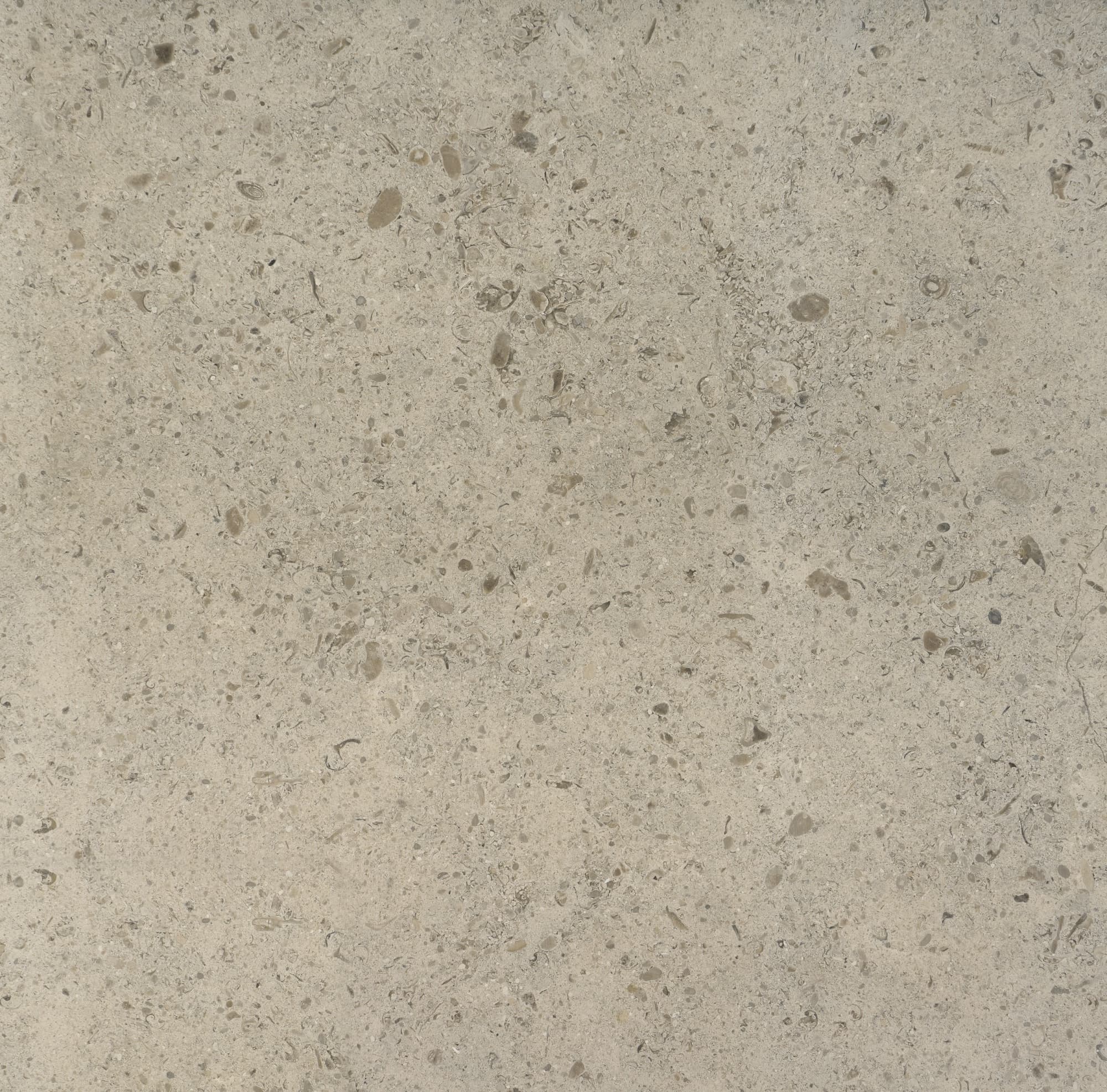
Moleanos limestone is one of the most specified stones in Portugal and one of the most misunderstood outside it. The confusion is almost always the same: someone specifies "Moleanos," the sample arrives, and it does not match the render. That is because Moleanos is not one stone. It is a family, and the differences between the members are large enough to change how a facade weathers or how a lobby floor reads at nine in the morning.
This guide clears that up. We publish three Moleanos variants and source them at the block, so what follows is how we actually brief them, not a data-sheet copy-paste. If you specify one thing from this page, make it the variant.
The one thing nobody tells you: Moleanos is three stones
There are three commercial Moleanos types, and the name on the drawing is not enough:
Moleanos Azul is the cool one. Blue-grey to grey, the densest and hardest-wearing of the family. This is the variant you want for exteriors, high-traffic floors, and anywhere the stone has to earn its keep structurally.
Moleanos Fine Grain is cream to soft beige, tight and uniform, with very little fossil interruption. It reads calm and modern across a large field. This is the interior specifier's default.
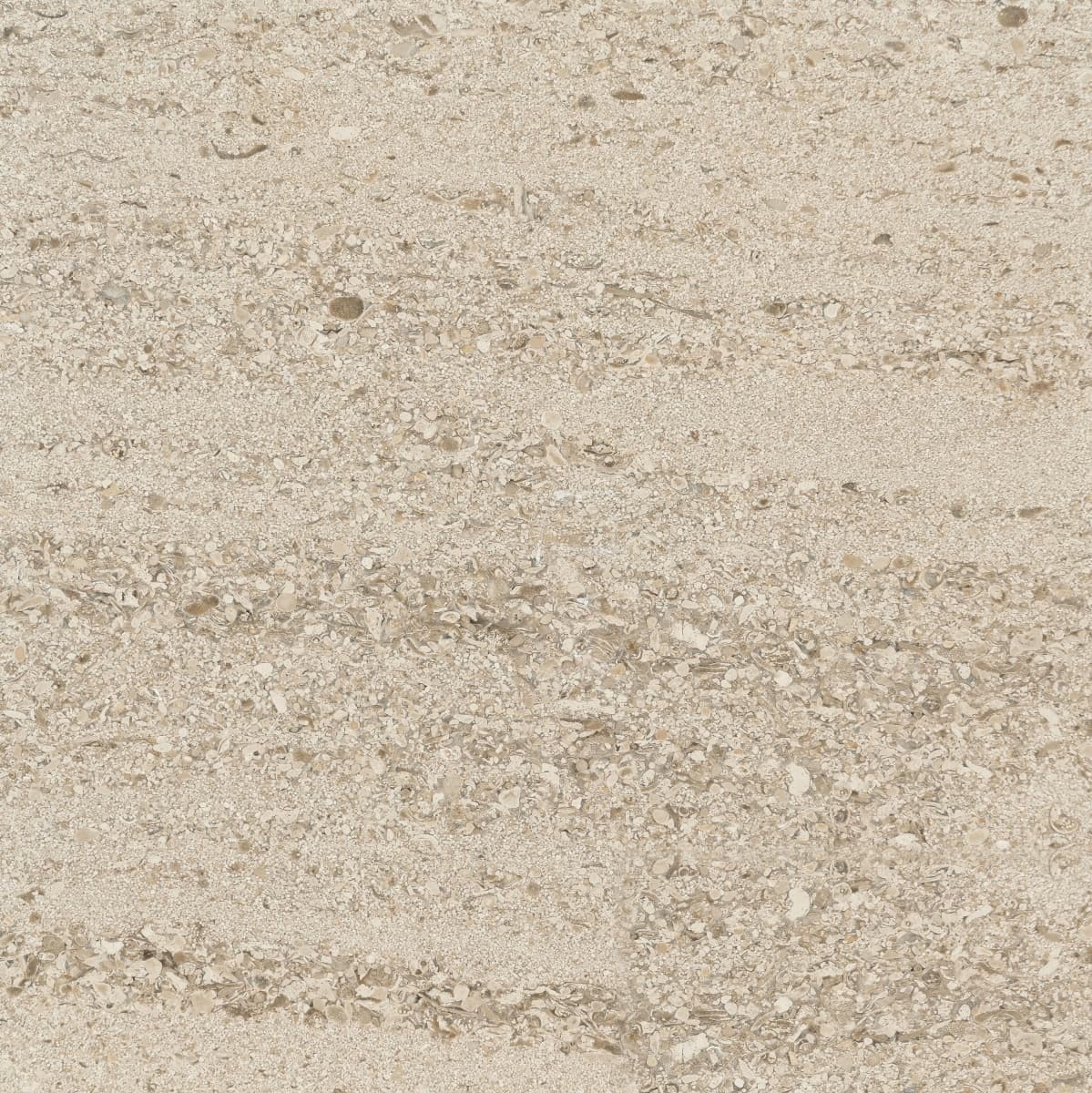
Moleanos Medium Grain is the same cream-to-beige family but with a more open grain and more visible fossil movement. More character, more life across a big wall, slightly less "quiet."
All three come out of the same limestone massif in central Portugal, near Porto de Mós. They share a DNA. But "Moleanos Azul honed" and "Moleanos Medium Grain honed" are not interchangeable, and a spec that just says "Moleanos" will get you whatever the yard has most of. Name the variant, every time.
What Moleanos actually is
Moleanos is a compact, fine-to-medium grained biocalcarenite from the Maciço Calcário Estremenho, the same geological region that gives us Moca Creme and Lioz. It is a sedimentary stone, calcite-based, formed from marine deposits, so you will find fossil traces and occasional shell fragments, more in the Medium Grain, less in the Fine Grain and Azul.
Colour runs cream to beige in the Fine and Medium Grain, and a distinctive cool blue-grey in the Azul. That blue-grey is rare among European limestones and part of why architects reach for it: it gives a masonry building a calm, slightly severe tone that beige limestones cannot.
The stone works in large formats. Blocks are consistent, and it saws and finishes predictably, which matters when you are cladding a whole elevation and need tone control across hundreds of pieces.
Technical properties, honestly framed
Here is where most supplier pages give you a single confident table. We will give you ranges, because that is the truth. Limestone varies by block, by bed, and by quarry face. Use these as orientation, then get test data for the actual material on your project before you commit.
Water absorption: roughly 0.9 to 3% by weight. Moleanos Azul sits at the low end, often under 1.5%, which is why it survives outdoors better than most limestones. The Medium Grain is more open and absorbs more. This single number tells you more about exterior suitability than any other.
Compressive strength: approximately 90 to 130 MPa. Strong for a limestone. Comfortably in the range for commercial flooring and cladding.
Flexural (bending) strength: approximately 10 to 18 MPa depending on variant and bedding direction. This governs how thin you can go on cladding panels and how they behave under wind load. Get variant-specific numbers before you size panels.
Density: roughly 2,500 to 2,650 kg/m³. Dense and compact, which correlates with the low absorption and good wear.
Hardness: around 3 on the Mohs scale. It is calcite, so it scratches more easily than siliceous stones and etches with acid. This is normal limestone behaviour, not a defect.
None of these numbers are marketing. They are the numbers that decide whether a panel cracks, a floor dishes out under traffic, or a facade spalls after a cold winter. If a supplier will not give you the flexural strength and freeze-thaw data for the exact material, that is your answer.
Matching finish to application
Finish changes everything about how Moleanos performs and looks. The stone is the same; the surface is the decision.
Honed is the default for interior floors and walls. It gives an even, matte, contemporary surface that shows Moleanos's uniform tone at its best. This is what most interior projects want.
Brushed (aged) softens the surface and adds a subtle tactile texture and slip resistance without the roughness of a heavy finish. Good for interior wet areas, spa floors, and residential exteriors.
Bush-hammered and sandblasted finishes add real grip and are the right call for exterior paving, pool surrounds, and ramps. On the denser Azul these hold up well.
Flamed works on the Azul, where the density lets the surface take thermal shock. It is less reliable on the softer beige variants, so test first.
Polished is possible but I would think twice. Limestone does not hold a mirror polish like marble, the sheen dulls under traffic, and it looks less honest as it ages. A honed or brushed Moleanos wears in; a polished one wears out.
Match the finish to the job before you fall in love with a sample photographed in perfect studio light.
Where Moleanos works, and where to be careful
Moleanos earns its reputation on interiors: lobby floors, feature walls, bathroom cladding, reception desks, stair treads. The Fine Grain across a large calm floor is a genuinely refined result, and the Azul makes a striking, cool-toned feature wall.
Outdoors, it is widely and successfully used for facades, cladding, and paving, especially the Azul. Portugal is full of Moleanos elevations that have weathered beautifully for decades. But "widely used outdoors" carries a condition, and it is the condition nobody prints on the sample.
The freeze-thaw caveat. Moleanos is not frost-proof by default. In a mild or temperate climate with good detailing it performs well outside. In a climate with hard, repeated freeze-thaw cycles, water that soaks into the stone and then freezes will, over years, cause spalling and surface loss. The denser the variant and the lower the water absorption, the better it copes, which is why Azul is the exterior choice. If you are specifying Moleanos for a fully exposed elevation in a cold climate, you need three things: freeze-thaw test results for that specific block, drainage detailing that stops water pooling and saturating the stone, and usually a breathable impregnating sealer. Do not skip the test data. A limestone that is perfect in Lisbon is not automatically perfect in a Scottish winter.
That honesty is the whole point of specifying with someone who sources the stone rather than someone who sells whatever is in stock.
Moleanos vs Moca Creme
These two get compared constantly because they come from the same region and often sit on the same sample table. The short version:
Moca Creme is warmer, beige to cream, with visible shell and fossil fragments and a more open, characterful texture. It has more "movement" and reads more traditional.
Moleanos is generally tighter and more uniform. The Fine Grain is calm and contemporary; the Azul offers a cool tone Moca Creme simply does not have.
Choose Moca Creme when you want warmth and visible fossil character, particularly on classic or hospitality projects that want a lived-in richness. Choose Moleanos when you want a quieter, more even, more modern field, or specifically when you want the blue-grey of the Azul. Neither is better. They are different tools. We publish both, so if you are torn, request samples of both in your chosen finish and look at them in the actual light of the space. That decision should never be made from a screen.
Sampling and specifying Moleanos
If you take one workflow from this guide: never specify Moleanos from a photograph, and never specify it by name alone. Get physical samples of the specific variant, in the specific finish, and look at them under the project's real lighting at the sizes you intend to use. Limestone tone shifts with format, finish, and light, and the difference between Fine Grain and Medium Grain across a ten-metre wall is not something a 100mm sample fully tells you either.
For exterior work, add the technical layer: variant-specific water absorption, flexural strength, and freeze-thaw data for the actual block reserved for your project, not a generic quarry average.
That is how we brief Moleanos for our clients: right variant, right finish, real test data, honest about the climate. If you are specifying it for a project, start a project brief and we will source it properly, or request samples of the three variants and see the differences in your own hands.


Notes from the studio
Occasional essays on material, sourcing, and the quiet craft of specifying stone. No noise.